



Introduction
You’ve spent months building your business plan. Your credit is solid. You’re ready to secure funding or land that major contract. Then you hit a wall: lenders want to see an established business history, not a startup that launched last week.
This is where shelf corporations enter the picture. These pre-aged business entities promise instant credibility and years of business history for surprisingly low prices. Some providers advertise shelf corporations under $500, which raises an obvious question: can you really buy business legitimacy for less than the cost of a decent laptop?

The shelf corporation market has exploded in recent years as entrepreneurs seek shortcuts to business credibility. While some providers offer legitimate aged corporations that comply with all legal requirements, the budget market is filled with questionable offerings that may do more harm than good. Understanding the difference between a legitimate aged corporation and a risky bargain could save you thousands in legal fees and protect your business reputation.
In this comprehensive guide, you’ll learn exactly what shelf corporations are, how the pricing works, why some cost under $500 while others command premium prices, and most importantly, how to identify legitimate providers from scams. You’ll discover the real benefits and limitations of aged corporations, common mistakes buyers make, and expert strategies for using shelf corporations effectively and legally.
What Is a Shelf Corporation?
A shelf corporation is a business entity that was legally formed years ago but has remained inactive, with no business operations, assets, or liabilities. These corporations were created and then placed “on the shelf” to age, similar to how wine increases in value over time.
The primary appeal of shelf corporations under $500 or at any price point is the instant business history they provide. When you purchase one, you acquire a company that may have been incorporated five, ten, or even twenty years ago. This aging period can make your business appear more established when applying for credit, bidding on contracts, or establishing vendor relationships.
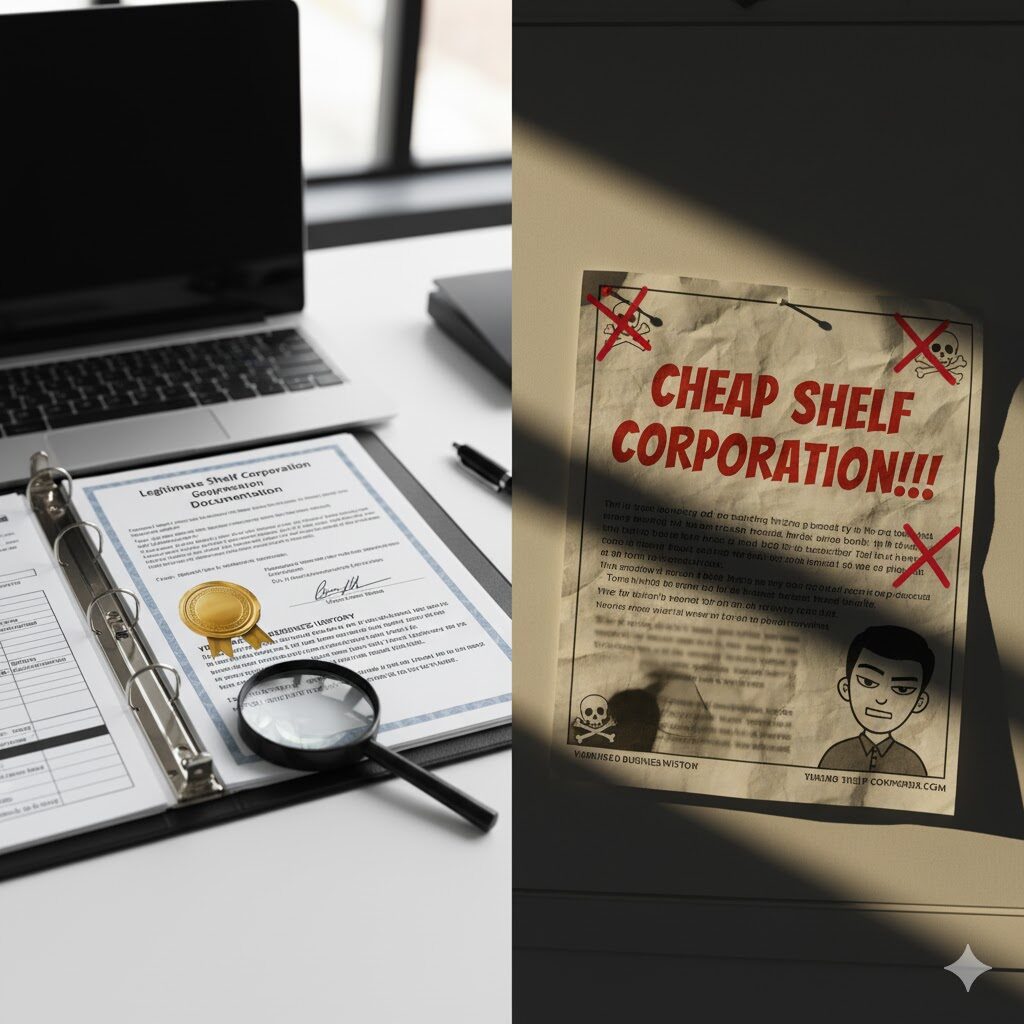
However, not all shelf corporations are created equal. A legitimate aged corporation should have a clean history with no previous business activity, no tax liens, no lawsuits, and a clear chain of ownership. The corporation should have filed all required annual reports and maintained good standing with the state of incorporation.
Cheap shelf corporations often cut corners in ways that can create serious problems. They may have gaps in their corporate maintenance, missing annual reports, or unclear ownership history. Some disreputable providers even sell the same corporation to multiple buyers, creating a legal nightmare.
Why Would Someone Buy a Shelf Corporation?
The primary motivation for purchasing shelf corporations centers on business credibility and access to opportunities that favor established companies. Many entrepreneurs discover that being “new” creates barriers that talent and capital alone cannot overcome.
Credit applications represent one of the most common reasons businesses seek aged corporations. Many lenders evaluate business credit applications differently when the company has years of documented existence. While a corporation’s age alone won’t guarantee credit approval, it can help you clear initial screening criteria that automatically reject very new businesses.
Contract opportunities provide another compelling reason. Government contracts and corporate vendor programs often include requirements for minimum years in business. A five-year-old shelf corporation might qualify you to bid on projects that would otherwise be off-limits to a startup.
The perception of stability matters significantly in business relationships. Suppliers may offer better payment terms to established companies. Clients may feel more comfortable signing long-term agreements with businesses that have demonstrated longevity. Investors and partners may view an older corporation as less risky than a brand-new venture.
However, the benefits come with important limitations. A shelf corporation provides age on paper, but it doesn’t provide actual business history, revenue records, or operational track record. Sophisticated lenders and partners will look beyond incorporation dates to evaluate your actual business performance and financial health.
How Do Shelf Corporations Work?
The shelf corporation industry operates through specialized providers who form corporations specifically to age them for future sale. The process begins years before you ever consider purchasing one.
Providers typically form dozens or hundreds of corporations at once in business-friendly states like Wyoming, Delaware, or Nevada. These entities are created with generic names and minimal capitalization. The corporations then sit dormant while the provider maintains them by filing annual reports, paying registered agent fees, and ensuring they remain in good standing.
When you decide to purchase a shelf corporation under $500 or at any price, the provider transfers ownership to you through a stock sale. You receive the stock certificates, corporate records, EIN documentation, and all formation documents. The provider files the necessary paperwork with the state to update the registered agent and corporate officers.
After the transfer, you can change the corporation’s name, amend the articles of incorporation, and begin conducting business. The original formation date remains unchanged, giving you the aged entity you purchased.
The price variations in the market reflect differences in age, state of incorporation, maintenance quality, and included services. Cheap shelf corporations typically offer minimal age and basic maintenance. They may be incorporated in states with complex ongoing requirements or higher annual fees.
Premium shelf corporations usually offer greater age, incorporation in favorable jurisdictions, comprehensive corporate records, and additional services like EIN application, corporate kit, and ongoing support. The extra cost reflects both the longer holding period and the higher quality of corporate maintenance.
What Makes Shelf Corporations Under $500 Different?
Budget-priced shelf corporations occupy a distinct segment of the market with specific characteristics that explain their lower cost. Understanding these differences helps you evaluate whether cheap shelf corporations meet your needs or represent false economy.
Age represents the most obvious factor. Shelf corporations under $500 typically offer two to four years of business age rather than the five to ten years common in premium offerings. The shorter aging period means the provider has invested less time and money in maintaining the corporation before sale.
The state of incorporation significantly impacts price. Corporations formed in states with high annual fees and complex compliance requirements cost more to maintain. Budget providers often use states with minimal ongoing costs, which keeps their prices low but may create complications if you need to do business in other jurisdictions.
Maintenance quality varies considerably in the budget market. Reputable low-cost providers maintain complete records and proper compliance but operate efficiently to keep costs down. Questionable providers may cut corners by missing annual reports, using unreliable registered agents, or maintaining incomplete corporate records.
Included services differ dramatically. Premium shelf corporations often include corporate kits, bank account assistance, credit building services, and ongoing support. Budget options typically provide only the basic transfer documents, leaving you to handle everything else independently.
The provider’s reputation and guarantees matter enormously. Established companies like Wholesale Shelf Corporations stand behind their products with clear guarantees and verified corporate histories. Fly-by-night operators offering impossibly cheap shelf corporations may disappear after the sale, leaving you with a problematic entity and no recourse.
Common Misconceptions About Cheap Shelf Corporations
Many buyers approach shelf corporations with unrealistic expectations that lead to disappointment and wasted money. Clearing up these misconceptions helps you make informed decisions about whether an aged corporation fits your situation.
The biggest myth suggests that buying a shelf corporation automatically qualifies you for business credit. While an aged corporation can help you meet minimum time-in-business requirements, lenders evaluate numerous factors including your personal credit, revenue, cash flow, and business plan. The corporation’s age is just one piece of a complex puzzle.
Another dangerous misconception claims that cheap shelf corporations work just as well as expensive ones. While some budget options are legitimate, quality matters significantly. A poorly maintained corporation with compliance gaps or unclear ownership history can create legal and financial problems that far exceed any initial savings.
Some buyers believe shelf corporations provide complete anonymity or asset protection. This misunderstanding can lead to serious legal trouble. All corporations must disclose beneficial owners, and aged corporations don’t provide any special privacy protections beyond what standard corporations offer.
The idea that older is always better represents another flawed assumption. A twenty-year-old corporation isn’t necessarily more valuable than a five-year-old one if you only need to meet a three-year minimum business history requirement. Paying for unnecessary age wastes money without providing additional benefit.
Perhaps the most harmful myth suggests that shelf corporations allow you to hide bad credit or escape personal guarantees. Lenders still require personal guarantees from business owners regardless of corporate age. Your personal financial history remains relevant to most business credit decisions.
Best Practices for Buying Legitimate Shelf Corporations
Successfully purchasing and using a shelf corporation requires careful research and strategic planning. Following proven best practices protects your investment and maximizes the benefits of business age.
Start by thoroughly researching potential providers. Look for companies with established track records, verifiable client testimonials, and transparent processes. Wholesale Shelf Corporations and similar reputable firms provide detailed information about each corporation’s history, maintenance records, and state of good standing.
Request and review complete documentation before purchasing. Legitimate providers willingly share articles of incorporation, certificate of good standing, past annual reports, and registered agent confirmation. Any provider who refuses to provide these documents or seems evasive should raise immediate red flags.
Verify the corporation’s status independently through state business databases. Most states offer online searches where you can confirm incorporation date, good standing status, and filing history. This simple step catches many fraudulent or problematic offerings.
Consider your actual needs carefully before selecting a corporation. Match the age, state of incorporation, and features to your specific requirements. Buying a ten-year-old Delaware corporation when you only need three years of history in Wyoming wastes money and creates unnecessary complexity.
Plan for proper integration after purchase. Budget time and money for changing the corporate name if desired, updating registrations, opening business bank accounts, and establishing proper corporate governance. These steps ensure your shelf corporation functions effectively as part of your business structure.
Work with qualified professionals during and after the purchase. An experienced business attorney can review the corporate documents and help you avoid legal pitfalls. An accountant can ensure proper tax filings and financial record-keeping from day one.
Red Flags That Indicate Illegitimate Shelf Corporations
The shelf corporation market includes both ethical providers and outright scams. Recognizing warning signs helps you avoid costly mistakes and potential legal problems.
Prices significantly below market rates should trigger immediate skepticism. While legitimate shelf corporations under $500 exist, offers of aged corporations for $200 or less typically indicate serious problems. Quality corporate maintenance costs money, and providers selling far below market rates are cutting corners somewhere.
Vague or missing information about corporate history represents a major red flag. Legitimate providers disclose exact formation dates, complete filing history, and current status. Providers who give only approximate ages or refuse to provide documentation likely have something to hide.
Pressure tactics and urgent deadlines suggest dishonest operators. Reputable shelf corporation providers understand that buyers need time to research and make informed decisions. Artificial scarcity claims and demands for immediate payment indicate a provider more interested in making quick sales than serving clients properly.
Promises of guaranteed credit approval or unrealistic benefits reveal fraudulent operations. No shelf corporation provider can guarantee credit approvals, specific credit limits, or automatic business success. These outcomes depend on numerous factors beyond corporate age.
Missing contact information or unprofessional websites warrant caution. Established providers maintain professional online presences, provide multiple contact methods, and respond promptly to inquiries. Anonymous operators using free email accounts and bare-bones websites often disappear after collecting payment.
Offers to sell corporations with previous business activity violate the fundamental principle of shelf corporations. These entities should have clean histories with no prior operations. Any corporation with existing assets, liabilities, or business activity creates legal and financial risks that no buyer should accept.
Tools and Resources for Shelf Corporation Buyers
Successfully navigating the shelf corporation market requires access to quality information and professional resources. These tools help you make informed decisions and avoid common pitfalls.
State business entity databases provide essential verification capabilities. Every state maintains searchable records of corporations formed within their jurisdiction. These free resources allow you to independently confirm incorporation dates, filing histories, and good standing status before purchasing any shelf corporation.
The Better Business Bureau and similar consumer protection organizations track complaints and ratings for shelf corporation providers. Checking these resources helps you identify providers with patterns of problems or unresolved customer issues.
Business formation services like Wholesale Shelf Corporations offer comprehensive support beyond just selling aged entities. These providers understand that successful shelf corporation purchases require proper documentation, clear title, and ongoing compliance support.
Professional advisors including business attorneys and accountants provide invaluable guidance. An attorney can review corporate documents and identify potential problems before you commit to a purchase. An accountant can help you understand the tax implications and ensure proper financial record-keeping.
Industry forums and entrepreneur communities share real experiences with various shelf corporation providers. While you should approach online reviews critically, patterns of positive or negative feedback provide useful insights into provider reliability and service quality.
Credit building resources help you leverage your shelf corporation effectively. Once you own the aged entity, you’ll need strategies for establishing business credit, building vendor relationships, and demonstrating operational history. Professional credit building services can accelerate this process.
Making the Right Choice: When Shelf Corporations Make Sense
Shelf corporations serve legitimate business purposes when used appropriately and purchased from reputable providers. Understanding when these entities provide real value helps you make smart decisions.
Shelf corporations under $500 can work well when you need modest business age to meet specific requirements. If a contract opportunity requires three years in business and you’re purchasing a four-year-old corporation from a legitimate provider, the investment may deliver significant returns.
Businesses planning substantial credit applications may benefit from aged corporations as part of comprehensive credit-building strategies. The corporate age provides one factor in your favor while you develop actual business credit, revenue, and financial strength.
Companies expanding into new markets or jurisdictions sometimes use shelf corporations to establish immediate presence. The aged entity can hold licenses, enter contracts, and conduct business while appearing established rather than brand new.
However, shelf corporations make little sense when the age doesn’t address specific business needs. If you’re launching a consumer brand where corporate age is irrelevant to customer decisions, the investment provides no meaningful benefit.
Similarly, if you lack the business fundamentals that lenders and partners evaluate, corporate age alone won’t overcome those deficiencies. No shelf corporation can substitute for solid business plans, adequate capitalization, good personal credit, and competent management.
The best approach views shelf corporations as one tool among many for building business credibility. They work most effectively when combined with strong business fundamentals, proper capitalization, and professional management.
Conclusion
Shelf corporations under $500 can be legitimate business tools when purchased from reputable providers and used appropriately. The key lies in understanding exactly what you’re buying and maintaining realistic expectations about the benefits.
Cheap shelf corporations typically offer shorter aging periods and more basic services than premium options, but legitimate budget providers deliver properly maintained corporations that meet their stated specifications. The challenge involves distinguishing quality budget offerings from problematic entities that create more problems than they solve.
Success requires thorough research, careful provider selection, and proper integration of the shelf corporation into your business structure. Working with established companies ensures you receive a legitimate aged entity with clean history and proper documentation.
Ready to establish instant time-in-business credibility? Contact Wholesale Shelf Corporations today for expert guidance on selecting the right aged corporation for your specific needs. You buy the corp, we get you funded. Our team provides comprehensive support from selection through integration, ensuring your shelf corporation delivers maximum value. Get instant time-in-business and take your business credibility to the next level.


%20new.png)